Useful beats impressive.
The best artifact earns a place in somebody's real life.
Away from the org chart
Cars, code, electronics, rooms, gardens, tools, and ideas all become systems once I spend enough time with them. This is the less polished, more personal side of the same engineering mindset.
The connective tissue
I like becoming competent in unfamiliar territory. That usually begins with a real problem, a lot of reading, and the willingness to produce an imperfect first version.
The same habits carry between software and physical work: model the system, expose assumptions, instrument what matters, keep the feedback loop short, and leave the result easier to change than you found it.
What survives the medium
The best artifact earns a place in somebody's real life.
Measure it, run it, drive it, grow it, or put it in somebody's hands.
Durable systems invite repair, revision, and the next useful idea.
01 / Making for others
Early in the COVID response, a friend asked whether I could print PPE for his wife, an infectious-disease doctor at a VA clinic whose disposable supply was running dangerously low. That concrete need turned three personal printers into a full-time production line.
The fundraiser brought in $2,360 from 43 donations and was shared 366 times. The work moved from an open-source design to material sourcing, repeatable fabrication, assembly, and finished batches for frontline healthcare workers.
Speed mattered, but consistency mattered just as much. Each revision had to print reliably, use the material efficiently, assemble without guesswork, and move cleanly from the workshop into somebody else's hands. It was a small manufacturing operation built around an immediate human need.
02 / Mechanical systems
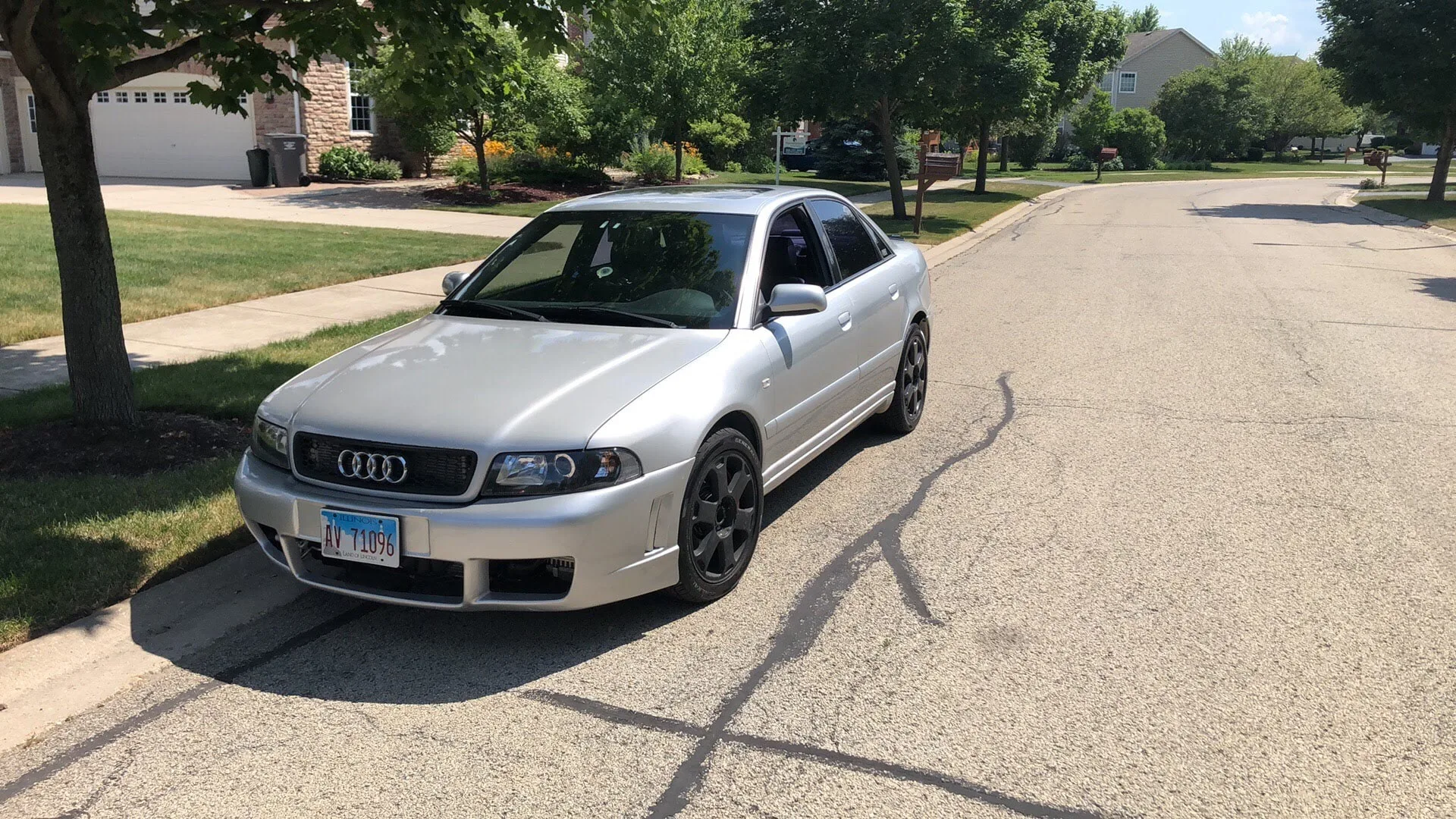
My B5 S4 was never just transportation. It was diagnosis, research, disassembly, tradeoffs, and the particular satisfaction of returning a complicated machine to service.
The interesting work lives between symptoms and root causes: understanding how the whole system behaves before replacing the part that happens to be loudest.
That meant documenting the teardown, organizing dependencies, studying failure patterns, and resisting the temptation to treat each component in isolation. The finished car matters, but the deeper reward is learning enough about the system to make a defensible decision when the evidence is incomplete.
03 / Physical computing
3D printing pulled software, electronics, mechanical design, and patient iteration onto the same workbench. I learned the tools because I wanted the object, then kept learning because each object exposed a better question.
I enjoy functional parts most: enclosures, mounts, organizers, interfaces, and the small custom pieces that make a larger system coherent.
A useful enclosure has to negotiate with the real world: board dimensions, cable paths, heat, mounting points, controls, tolerances, and the order in which a person can assemble it. Every prototype makes those hidden constraints visible and turns the next revision into a more informed one.
04 / Growing systems
The hydroponics build started with PVC, pumps, cups, and a question about whether I could make a compact growing system work at home. The answer came through successive versions, not a perfect plan.
This is the same systems instinct in a different medium: flow, feedback, constraints, failure modes, maintenance, and an outcome that makes the work tangible.
Plants are unusually honest observability tools. Flow, light, nutrients, spacing, and maintenance all show up in the result. The system improved by watching those signals, changing one constraint at a time, and designing the next version around what daily operation actually required.
The center
Fatherhood shapes what I value: patience, durability, curiosity, and building things that give other people room to grow. That part of my life matters most, so this site keeps it present without turning private lives into public content.
Same builder, different surface


